

VOLTAGE OPTIMISATION
Stop wasting energy, optimise your voltage
for efficiency.
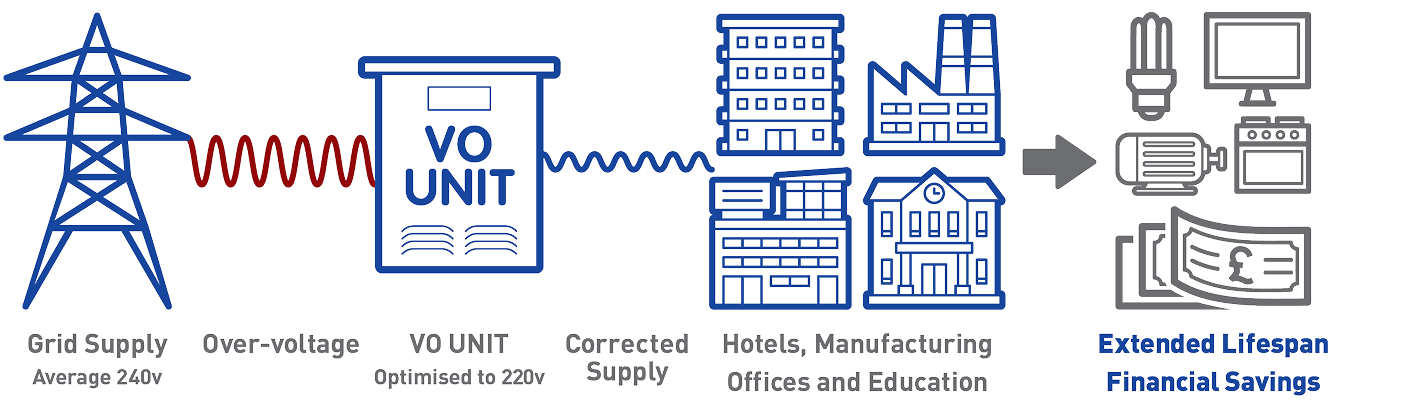
Around 90% of electricity customers are wasting energy because power from the grid is not supplied at the optimum voltage. This results in over-supply, higher bills, and premature equipment failure.
Our voltage optimisation solutions ensure your site uses only the energy required, reducing costs, waste, and long-term damage.
- Prevents over-supply that shortens equipment lifespan
- Reduces wasted energy and unnecessary costs
- Improves performance of motors, HVAC, and LED lighting
- Extends equipment life, lowering replacement and maintenance costs
- Suitable for sites of all sizes, from retail to industrial
- Minimises operational disruption and downtime
- Contributes directly to carbon reduction and sustainability targets
For example, a 230V rated lamp run at 240V fails in 550 hours instead of 1,000 while consuming 9% more energy. Across an entire site, this accelerates wear, increases waste, and raises costs. Installing voltage optimisation protects your systems, extends equipment life, and delivers immediate financial and environmental returns.

WHAT ARE THE BENEFITS TO YOU?
The key benefits of voltage optimisation are energy savings through reduced consumption, extended equipment lifespan by preventing wear from over-voltage, and a lower carbon footprint due to decreased energy use. It also leads to lower electricity bills, reduced maintenance costs, and improved power quality.
Energy savings
By supplying the ideal voltage level your equipment needs, it reduces wasted electricity, which can lower energy consumption and costs significantly. Typical savings are
5–10% on electricity bills.
Extended equipment lifespan
Over-voltage can strain and shorten the life of electrical components. Voltage optimisation protects equipment by reducing this excess stress, leading to fewer breakdowns and lower maintenance costs.
Reduced carbon footprint
By using less energy, businesses and facilities decrease their carbon emissions and contribute to sustainability goals.
Lower electricity bills
Directly as a result of reduced energy consumption, electricity bills are lowered.
Reduced maintenance costs
Lower wear and tear on equipment translates into lower maintenance needs and less frequent replacement expenses.